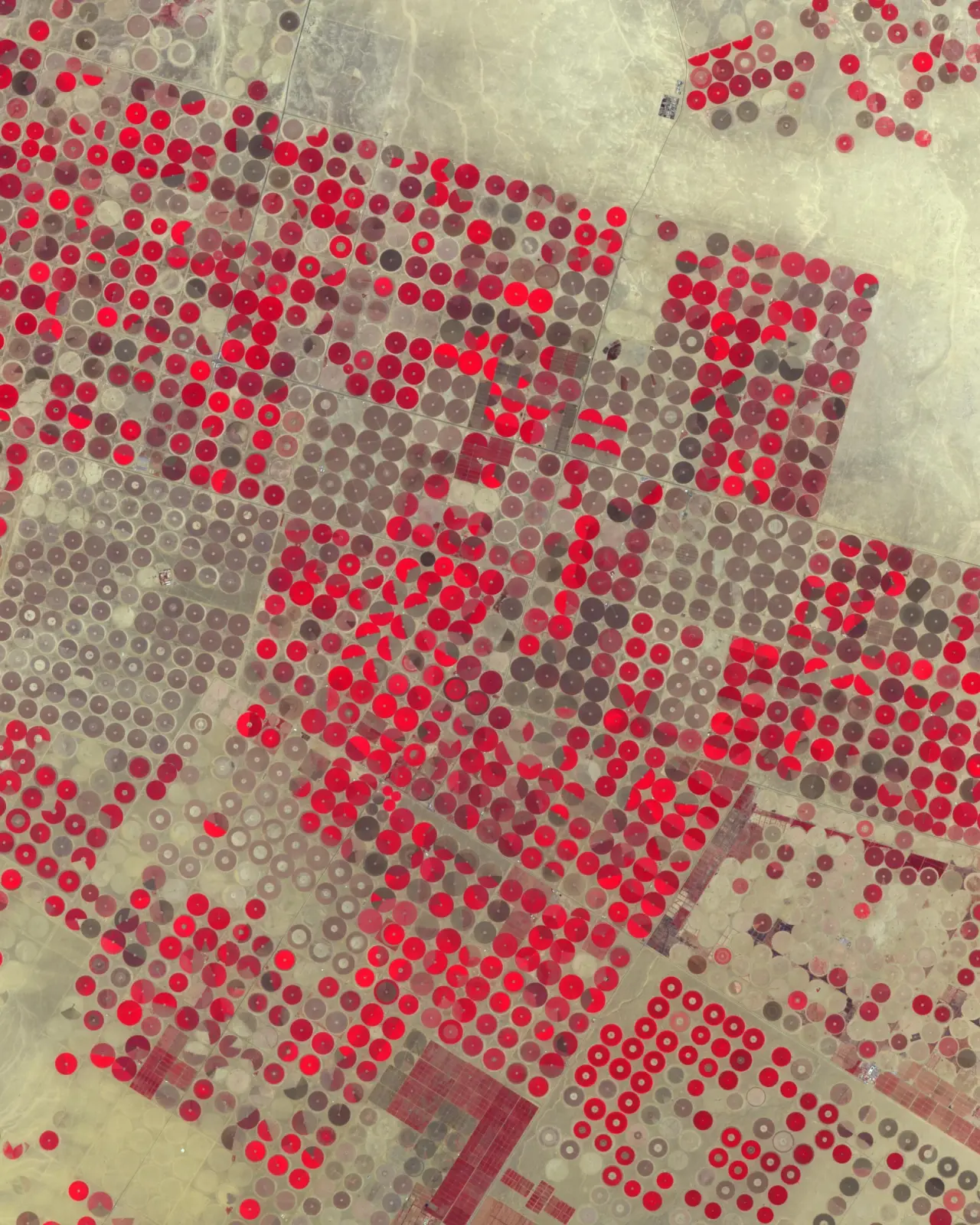
Agriculture
Soil moisture and crop health for every single field. Farmers know which irrigation circle to switch off before they see it from the tractor.
8bands, from visible light to infrared
ORX-1 constellation · 48 satellites · 525 km orbit
We build and operate a constellation of small Earth observation satellites. You get an image of any place on the planet within an hour of ordering it, not a week.
Telemetry (sample data)
01Anatomy
Scroll and the satellite comes apart. ORX-1 is the size of a carry-on case, yet it holds a telescope, a computer that judges its own images, and a thruster that will bring it down after five years.
18 cm aperture · 30 cm per pixel
A Korsch telescope with a silicon carbide mirror. It images in 8 bands, from visible light to near infrared, across a 12 km swath.
4 wings · 86 W · 120 Wh
Gallium arsenide solar wings unfold right after separation from the rocket. Lithium-ion batteries carry the satellite through the 35 minutes of every orbit spent in Earth’s shadow.
3 reaction wheels · 0.01° pointing
Two star trackers read the attitude from the stars, and three reaction wheels turn the satellite without using propellant. From 525 km the telescope hits a target the size of a football pitch.
On-orbit analysis · 4 TOPS
An onboard neural network drops frames hidden by cloud and crops what matters. Less data comes down, so it arrives sooner.
10 Gb/s laser · X-band · UHF
A laser terminal sends images to ground stations and to neighbouring satellites. X-band is the backup link, and commands travel over UHF.
Hall thruster · krypton · 180 m/s ΔV
An electric Hall thruster running on krypton holds the orbit and dodges space debris. When the mission ends it lowers the orbit so the satellite burns up in the atmosphere.
02Coverage
48 satellites fly in six orbital planes, and 14 ground stations from Svalbard to Antarctica receive their images. Spin the globe or pick a station from the list.
Drag to spin it. With a keyboard: arrow keys.Swipe sideways to spin it.
Selected station
Svalbard Norway
03Applications
The same satellites work for farmers, emergency services, scientists and cities. The frames below come from NASA missions, because our constellation is fictional.
Soil moisture and crop health for every single field. Farmers know which irrigation circle to switch off before they see it from the tractor.
8bands, from visible light to infrared
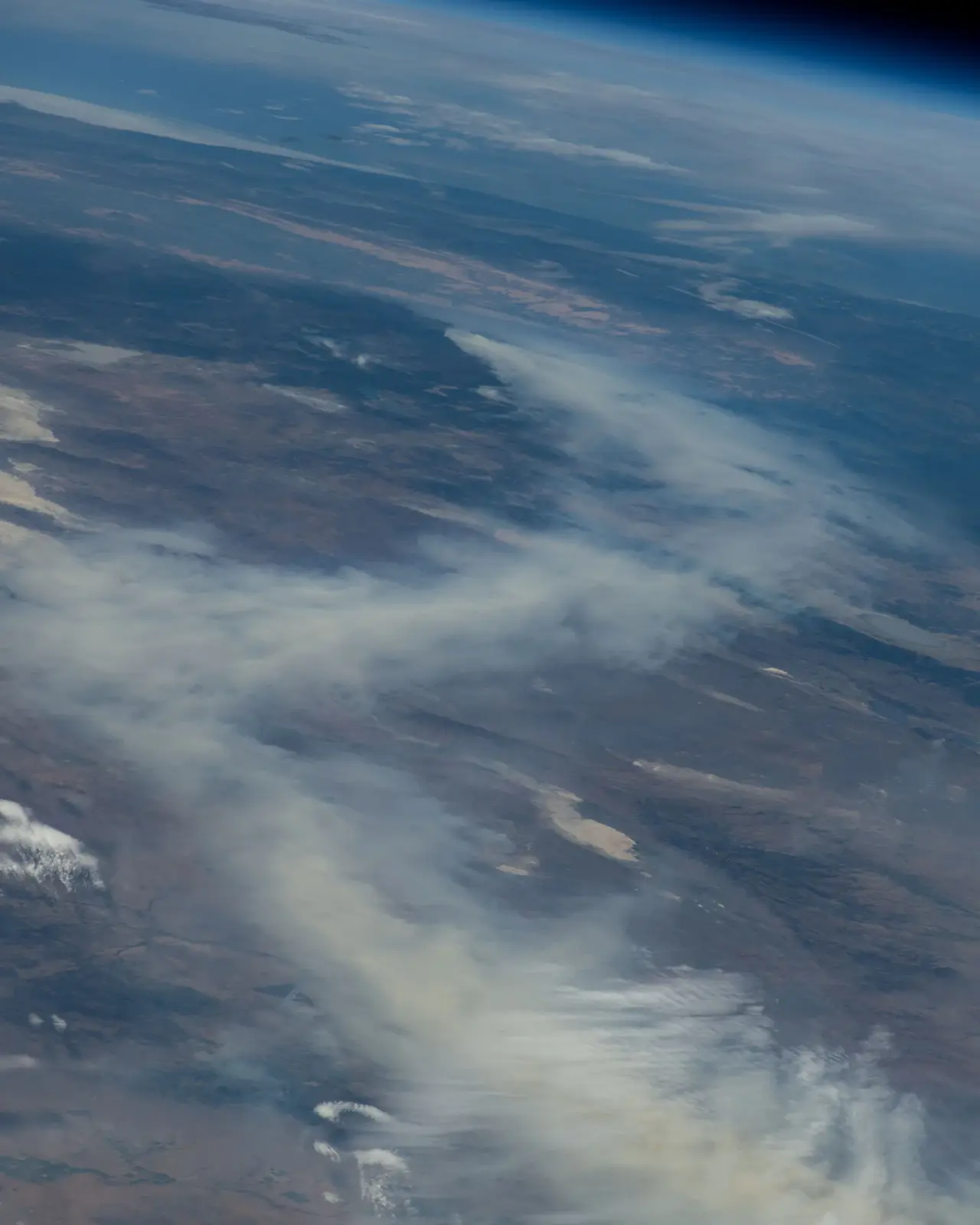
A fire shows up in infrared before the smoke reaches the nearest village. Crews get a new map of the fire front every hour and a half.
90 minbetween fire maps
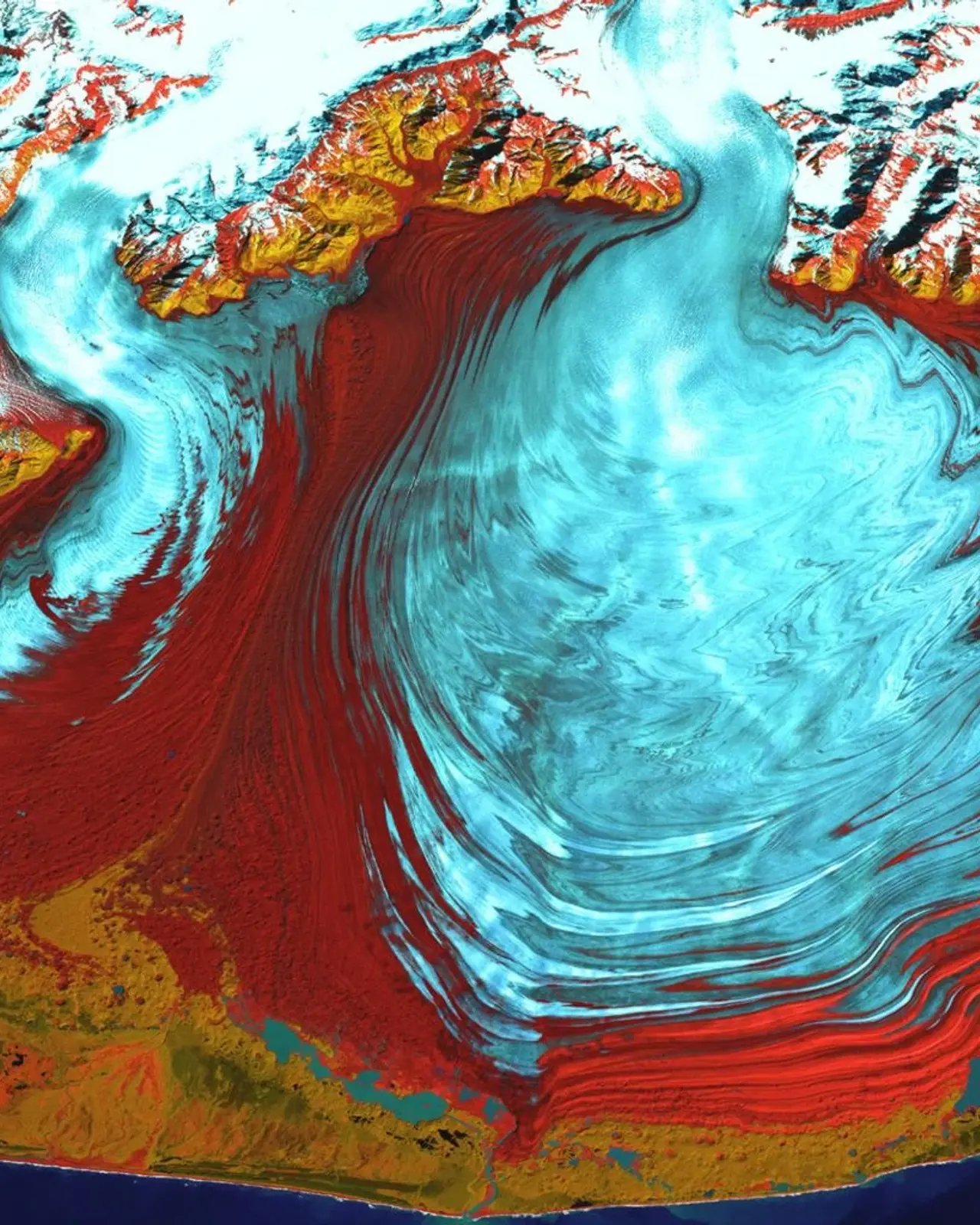
Glaciers retreat by tens of metres a year. We compare the same places day after day and measure how much ice is gone.
30 cmsmallest visible change
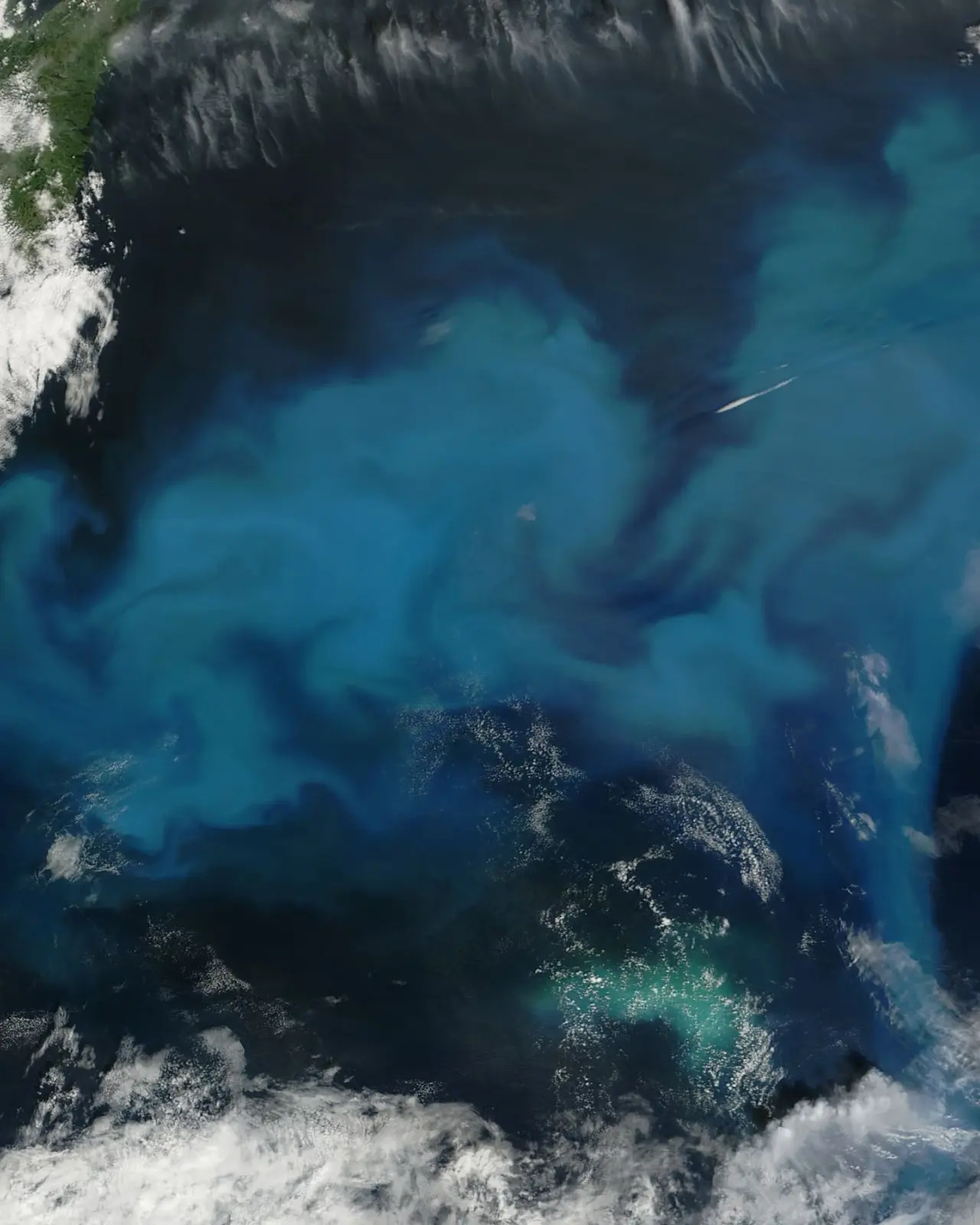
Algal blooms, oil slicks and ships with their transponders off. You can’t watch an ocean from a boat, but you can from orbit.
361 mln km²of ocean covered every day
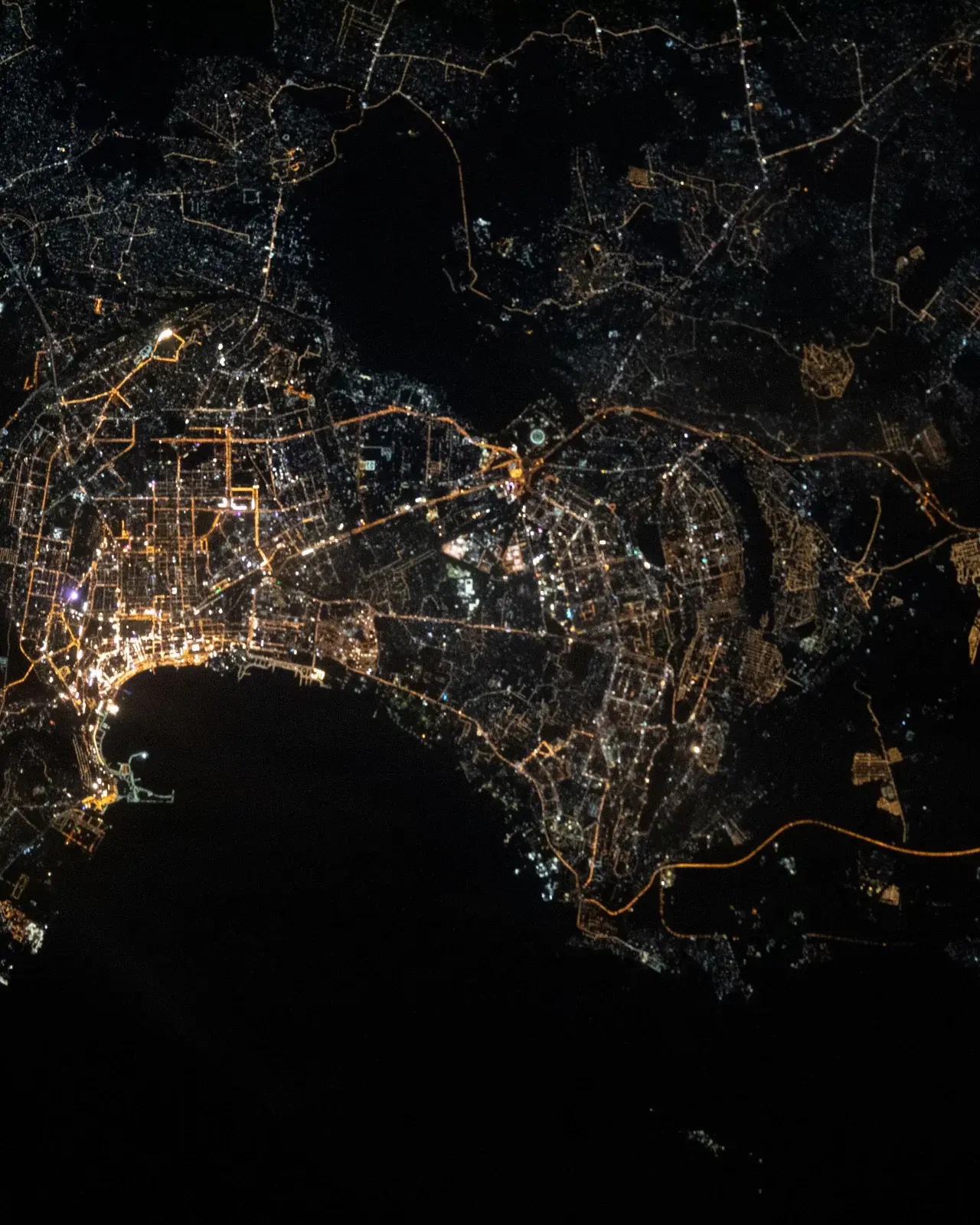
New districts, roads and power lines. At night the satellite sees city lights, so after a blackout you know at once which districts are dark.
24 hof observation, night included
04Contact
Tell us what you want to watch and how often. Within one working day we’ll send back a sample of data from your area.
Or write directly:hello@ortyx.example